

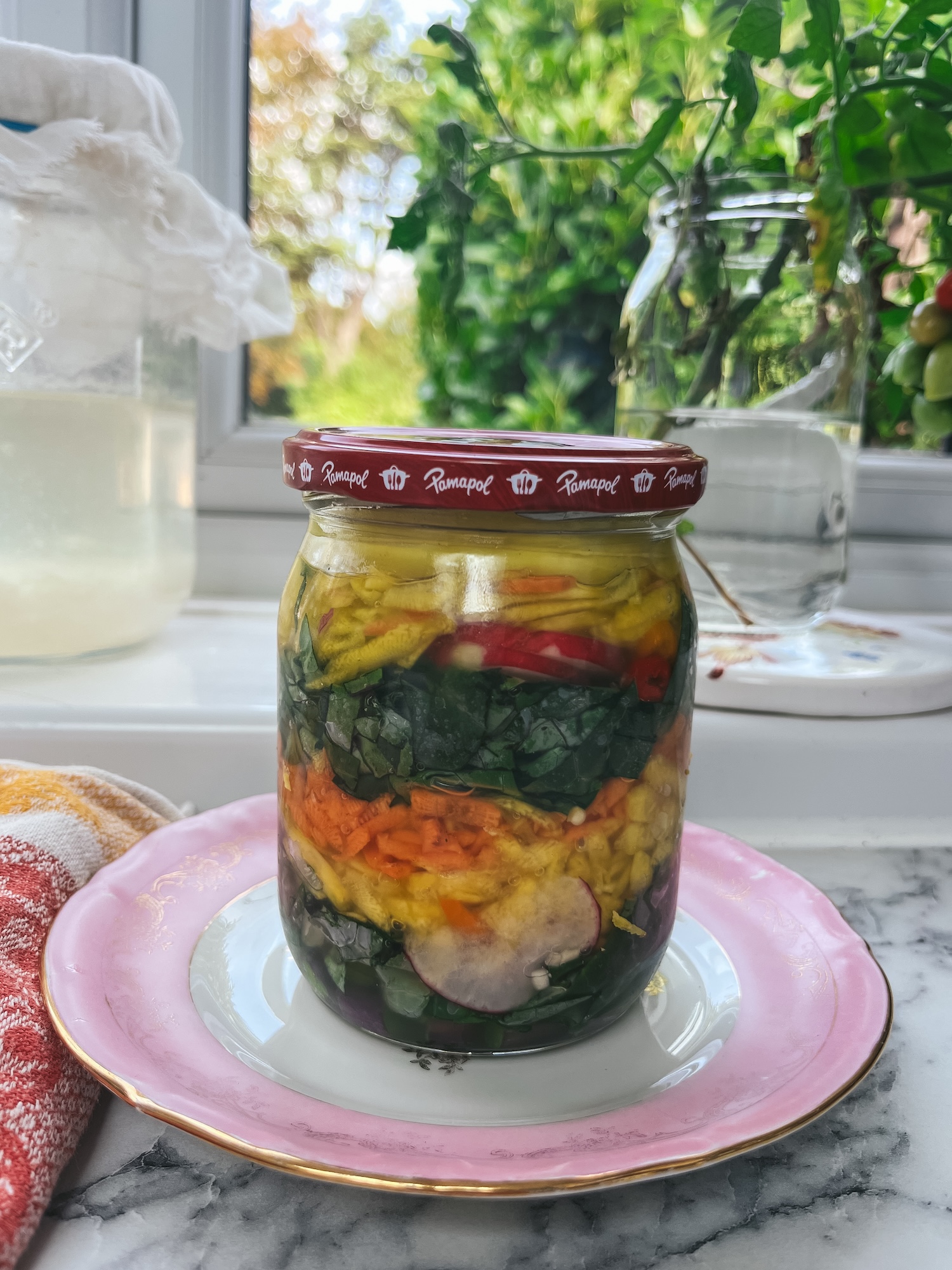
28 Sep A rainbow ferment to boost your immunity
Time of year to be fermenting
Autumn/Fall is, of course, the traditional time of year to ferment and preserve our food. It’s also the time of year when we are in need of an immunity boost, lest the dreaded seasonal cold (or worse still, flu) get the better of us. My kids caught colds as soon as they went back to school, even though they were eating this ferment, so by no means does it mean you won’t get ill, but maybe, just maybe, it won’t hit you as hard. Take that as a disclaimer.
Why I ferment
Fermentation has been a part of my life since childhood. It was so much as part of my life that I took it for granted. It was only when I started writing cookbooks (Polska and Amber&Rye) that I delved deeper into the whole process and what it means to East Europeans. This stoked the fire and fermentation became a daily part of my life. A big part of rekindling it was realising that it doesn’t have to be this long process involving tons of gherkins. It can be as simple as sticking some veggies in a jar and covering them with salt water.
Science of fermentation
Nowadays, science seems to be catching up with the East European grandmothers and proving how good it really is for us, a recent highlight was discovering that kimchi can remove microplastics from the body! Of course, the fact that fermented foods are full of probiotics has been known for a while now and we are constantly discovering the benefits of those micro-organisms. For me, gut health has become a big interest since having kids and being diagnosed with endometriosis (an inflammatory condition). If you want to delve deeper into the world of fermentation, I recommend this group.
My recipe for a rainbow ferment
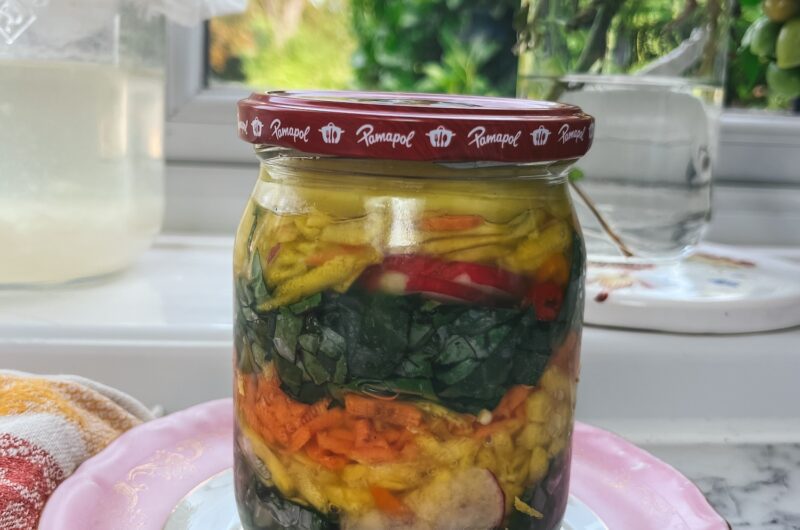
A rainbow ferment to boost your immunity
Course: fermentDifficulty: Easy4
servings30
minutes40
minutesYou can swap and change the ingredients to suit you. I used perennial kale, as the only thing that’s done really well this year in my garden, after a summer of drought. Makes 1 x 400ml jar or similar.
Ingredients
2 perennial kale leaves or 300g kale, shredded
2-3 radishes, finely sliced
2 carrots, peeled and shredded
1 small chilli, deseeded and finely sliced
2-3 small orange peppers or 1/4 orange pepper, finely sliced (julienned)
1 garlic clove, chopped
200ml warm water from pre-boiled kettle mixed with half a tablespoon salt
Directions
- Place half the kale in a sterilised jar. Cover with half of the other vegetables and press it down.
- Fill the jar with the remaining kale, followed by the other veggies.
- Press the veggies down and cover with the salt water.
- Place something over the top to keep the veggies under the brine.
- Place a lid loosely over the top and put the jar on a small plate.
- Leave at room temperature for 3-4 days, then transfer to the fridge and eat within a fortnight.