

02 Jan Lessons from my garden in 2025
Looking back at 2025, I can see that for me it was mostly about being in the garden, spending time with it and learning from it. As a food writer and cook, I was always interested in growing my own food. However, I’ve never been particularly green fingered. Since childhood, I have loved foraging and using plants for both food and healing purposes. My grandmothers taught me many things (my book Slavic Kitchen Alchemy is testament to that), and I have fond memories of picking mushrooms in the woods and sorrel for soup from the summer fields in Poland. I found it hard to grow anything myself. In the past year, my garden has changed me.
Gardens past
In my first ever garden in Hackney (north London), I grew some beautiful courgettes (zucchini). I picked a few baby ones to eat along with the flowers, which I duly stuffed with ricotta and fried. Delicious. A week later, I returned to my garden to find them all dead and shrivelled. That put me off growing anything for a long time. A few years later, it was time to try again. My garden in Lewisham (south London) was north facing, so the only option to grow food was the tiny front patio. My daughter was with us by then. I was determined to grow something that we could pick and eat together, to show her where food comes from. So. we set up a few planters. I even had a little bench in the front, where I would have my morning coffee among the herbs. This makes me smile, because it’s such a Polish thing to do. Here, I loved how wild rocket found its way to the planters, teaching me that it doesn’t have to be hard. I also learnt there is how a little, forgotten seed can fight its way back to life. I had forgotten about this potted seed while we went away and I thought it was dead like the others, all the earth dried up. When I went to chuck it out, I found a sprout though. I chucked it in a big pot, gave it some water, and forgot about it once more. On returning from holidays, an imposing squash plant had trailed around my entire front yard, climbing all over everything and producing one, very tasty squash.
Garden present
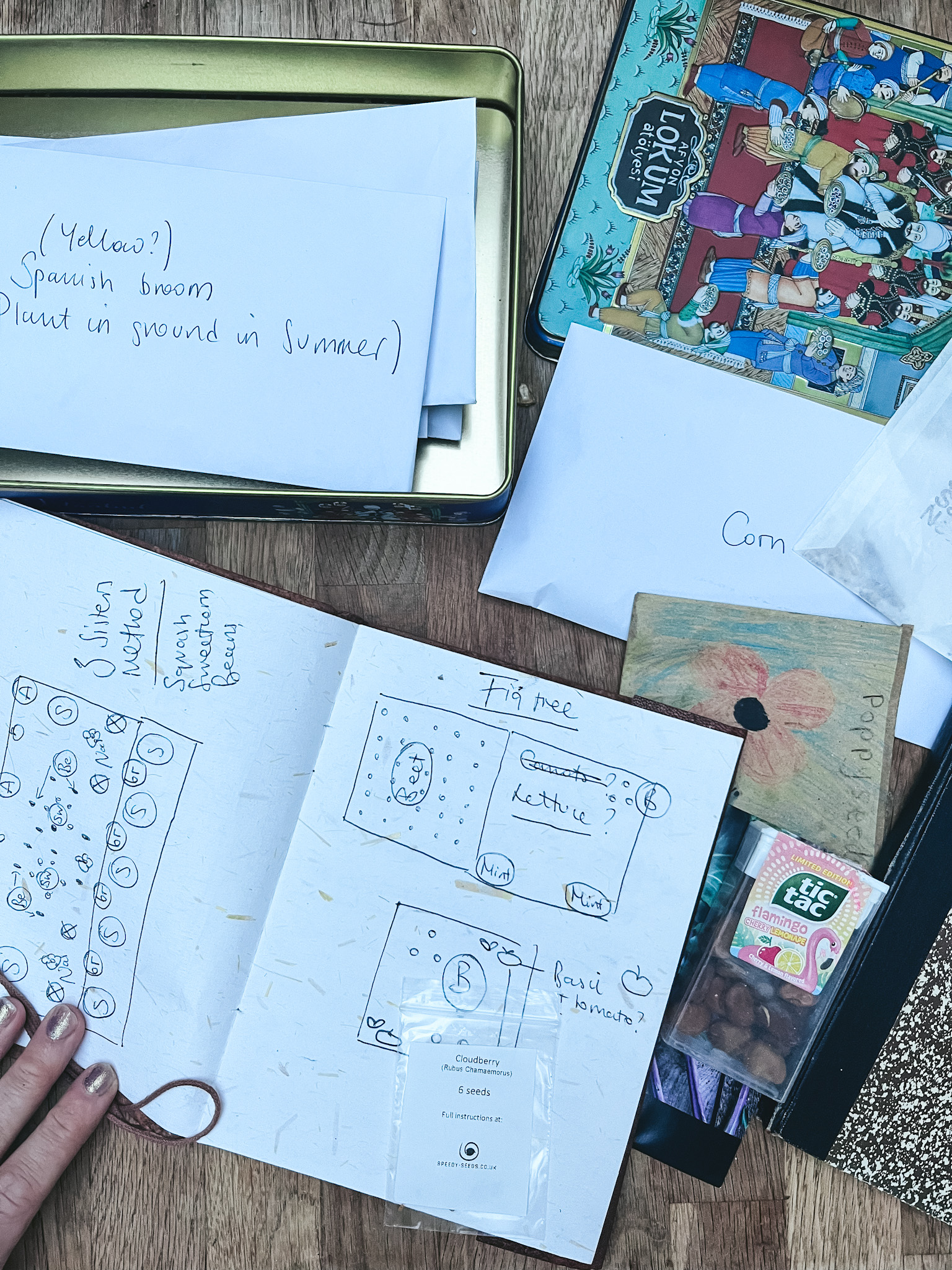
Now that we have moved into our seaside forever home (I hope!), there is a large garden with plenty of potential. The first year, plenty of stuff was left over from the last owners, so I was watching what came out (mainly potatoes) and I grew some board beans to improve the soil. I tried a few other things, but the earth did not seem to want to grow anything else. I decided to use cardboard and compost over winter. 2025 was another story. We grew the three sisters: corn, squash and beans and planted some fruit trees and globe artichokes. I knew that I wanted some permanent features in my vegetable garden, as well as the annuals like radishes, carrots, beetroot and lettuce. I fought often with slugs and learnt where I cannot grow anything lest it get eaten. We didn’t get huge amounts of food in 2025, but I grew many more things than ever before, so I consider it to be a success. Vitally, it was a steep learning curve.
Garden as teacher
Firstly, I have learnt exactly what I want from my garden:
1. Nourishment. As a food writer, any kind of gardening for me has always been to do with what I can cook and prepare in the kitchen. Yet, I have realised that even though our garden is large, self sufficiency is a long way off. What I can do is create a garden that complements my weekly fruit and vegetable shop with variety.
1. An ecosystem. After going away for three weeks in the summer, my vegetable patch turned wild. I posted about it on Substack, as I was overwhelmed, yet also curious and interested. I was uncomfortable with the mess, yet it was also beautiful and I realised that nature wants to do it’s thing. This is when I started looking into food forests.
The garden has also taught me skills that apply to my life:
1. Resilience. I don’t give up and become disheartened like I used to. This year, all my tomatoes died suddenly. It’s disappointing, but I wouldn’t stop trying to grow tomatoes as a result. Equally, it has also taught me not to put all my eggs in one basket, to grow more than one thing. Diseases happen and it’s very disheartening if everything is lost.
2. Balance and fairness. I’ve learnt that growing things is a two-way relationship, not just take, take, take. It’s important to be balanced and fair. The earth provides, but we also should expect to give energy, time and nourishment.
3. Patience. This was a big one for me, as I am not a naturally patient person. Yet, there is a right time to grow things and a wrong time. No need to to rush, we wait for the best moment. In the meantime, we can tidy, do research and planning.
4. Going with the flow. There is no point trying to grow things that aren’t working in your garden or forcing things to be in the wrong place, just because you had an idea. I see what works and I do more of that. I find that gardening is more enjoyable when you learn to listen to what the earth and the plants are trying to tell you and going with their natural flow rather than trying to control things.
Garden plan for 2026
After researching permaculture this year, I have decided that a part of my garden needs to become a food forest. Around the sides of my vegetable patch, where the slugs tend to demolish annuals, will be it’s own eco system, including various guilds formed around the fruit trees. I will continue to do the three sisters in the middle part, as I did with much success in 2025.